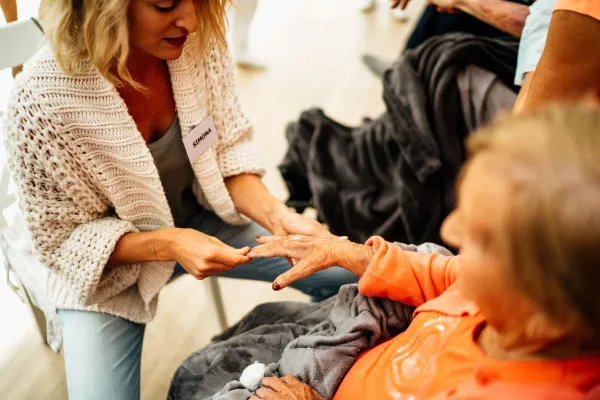
The best activities for seniors with dementia are simple, familiar, and tied to who the person has always been — folding laundry, music from their younger years, watering plants, looking through photo albums. The goal is not performance or winning. It is connection, comfort, and a feeling of purpose that lasts after the activity ends.
If you care for a parent or spouse with Alzheimer's or another dementia, you have probably watched an activity fall flat. The puzzle was too hard. The craft felt childish. Everyone walked away discouraged. That is common — and it is fixable.
This guide shares activity ideas that real caregivers use every day, plus the simple rules that make them work. Most use things you already have around the house.
Why Engagement Matters for Someone With Dementia
Long, empty hours are hard on a person with dementia. Boredom can feed anxiety, restlessness, and agitation — especially in the late afternoon, when many people experience sundowning.
The Alzheimer's Association notes that meaningful activity can reduce behaviors like agitation and wandering. It also helps a person feel connected and valued — like a real part of the household, not a guest in it.
Dementia changes memory and language. It does not erase the need to feel useful. The right activities for seniors with dementia meet that need in small, daily ways.
Five Golden Rules Before You Start
Before you try any of the ideas below, keep these rules in mind. They matter more than the activity itself.
- Match the activity to current abilities. If a task gets too hard, adapt it — don't quit it. A lifelong baker may no longer follow a recipe but can still stir, pour, and taste.
- Focus on enjoyment, not the outcome. Crooked towels and lopsided flower arrangements are wins. The point is the doing, not the result.
- Keep sessions short. Fifteen or twenty minutes is plenty. Several small moments beat one long project.
- Follow their lead. If they seem restless or tired, stop. If they light up, stay with it.
- Tie activities to lifelong identity. A former cook, gardener, teacher, or parent still carries those roles inside. Activities that honor those roles land best.
Activities for Seniors With Dementia, by Type
There is no single right list. The best activities for seniors with dementia fall into a few simple groups. Try a little of each, and notice which ones bring out a smile.
Everyday Purpose
Simple household tasks work because they feel real, not invented. The motions live deep in long-term memory, so hands often remember what words cannot.
- Folding towels, washcloths, or socks
- Setting the table for a meal
- Sorting buttons, coins, or playing cards by color or size
- Sweeping the porch or the kitchen floor
- Helping with simple cooking steps — stirring, tearing lettuce, measuring
Music and the Senses
Musical memory often stays strong deep into dementia. Gentle sensory experiences can reach a person even when conversation gets hard.
- A playlist of songs from their teens through their early thirties
- Sing-alongs with hymns or old favorites
- Smelling and snipping fresh herbs like rosemary or mint
- A gentle hand massage with scented lotion
Outdoors and Movement
Daylight and gentle movement support mood, appetite, and better sleep. Even ten minutes outside can change the tone of an afternoon.
- A short walk around the yard or down the block
- Porch sitting with a glass of sweet tea, watching the neighborhood go by
- Watering plants or pulling a few easy weeds
- Watching and feeding birds at a feeder
Memory and Connection
Memories from long ago often stay reachable when recent ones fade. Reminiscing lets a person succeed at remembering instead of failing at it.
- Looking through photo albums together, one page at a time
- Life-story questions: “Tell me about your first car” or “How did you two meet?”
- Flipping through old magazines or catalogs from their era
- A reminiscence box — familiar objects like hand tools, fabric scraps, or kitchen utensils
Creative Expression
Creative activities have no wrong answers. They give a person a way to express feelings when words are harder to find.
- Painting or watercolors, with big brushes and simple subjects
- Coloring pages with large, simple designs made for adults
- Easy crafts, like decorating greeting cards
- Arranging fresh flowers in a vase
What to Avoid
Even good activities can go wrong when the framing is off. A few well-meaning habits do more harm than good:
- Quizzing. “Don't you remember?” turns a warm moment into a test they may fail.
- Childish framing. Avoid toys or games clearly made for children, and never use baby talk.
- Overstimulating settings. Loud televisions, big crowds, and background noise make focus nearly impossible.
- Too many steps. Complicated recipes and multi-stage games invite frustration. One step at a time wins.
- Correcting mistakes. If the towel is folded “wrong,” it is still folded. Let it be.
Adapting Activities as Dementia Progresses
Activities for seniors with dementia need to change as the disease moves forward. The goal stays the same — connection and purpose — but the form gets simpler over time.
Early stage: many favorite activities continue with light support. Your loved one may just need setup, reminders, or company. If you are not sure where your parent is on this road, our guide to the early signs of dementia can help you prepare for a conversation with their doctor.
Middle stage: simplify. Break tasks into one step at a time, work alongside them, and keep sessions shorter.
Late stage: shift from doing to sensing. Music, touch, scent, and your calm presence matter more than any task. Holding a hand while a favorite song plays is a complete activity.
The National Institute on Aging offers practical suggestions for adapting activities at every stage.
How Activities Work in a Small Home Like TrueNest
In a large community, activities often mean a printed calendar and a crowded activity room. In a six-resident family care home, they look different — quieter, more personal, and woven into the day.
At TrueNest Senior Living in Harrisburg, the same caregivers work with the same six residents every day, at a one-to-three ratio. They know who used to cook Sunday dinners, who kept a garden, and whose face changes when gospel music comes on.
So engagement happens naturally: tearing lettuce for lunch in the kitchen, an hour on the porch after the meal, a familiar playlist in the afternoon. It is part of how our memory care works, not an event on a schedule. You can see how a full day unfolds in our day-in-the-life post.
Seeing Engaged Days for Yourself
The easiest way to judge any care setting is to watch an ordinary afternoon. Notice whether residents are doing things — or just sitting in front of a television.
If you are exploring memory care around Harrisburg, Concord, Charlotte, or nearby towns like Davidson, we would love to show you. Schedule a visit, stay for porch time, and see how the day feels.
Frequently Asked Questions
What activities are best for late-stage dementia?
Sensory activities work best in late-stage dementia. Try playing familiar music, offering a gentle hand massage with lotion, brushing hair, or sharing soft fabrics and familiar scents. Your voice and touch carry meaning even when words no longer do. Keep visits calm and short, and watch for signs of comfort like relaxed hands or a softened face.
How long should activities last?
Keep activities short — about fifteen to twenty minutes is plenty for most people with dementia. Several brief moments of engagement spread across the day work better than one long project. Always follow the person's lead: stop when they seem tired or restless, and stay longer when they are clearly enjoying themselves.
What if my parent refuses every activity?
Refusal is often fear of failing in disguise. Instead of asking, start the activity yourself — begin folding towels or looking at an album — and let them join in. Try again at a different time of day, since energy and mood shift. If refusals come with new confusion or sadness, mention it to their doctor.
Do activities really slow dementia down?
No activity has been proven to stop or reverse dementia, and you should be careful with anyone who promises that. What engagement reliably does is improve quality of life right now — better moods, less restlessness, more moments of real connection. Those benefits are worth pursuing every day. For medical guidance, talk with your loved one's doctor.
Are group activities better than one-on-one time?
For most people with dementia, one-on-one or very small group activities work better. Large groups bring noise, waiting, and confusion that can overwhelm. This matters when comparing care settings, too — ask how many residents share an activity, and whether caregivers know each person well enough to adapt on the spot.