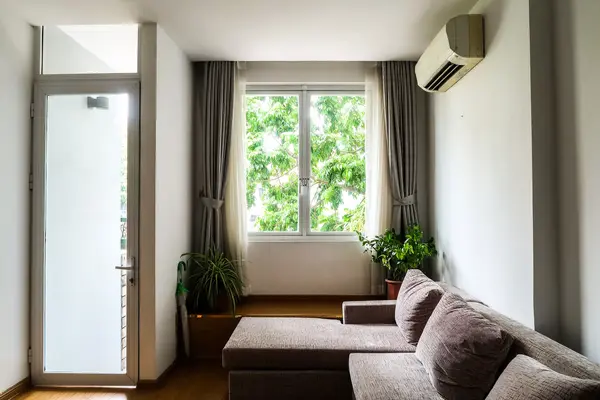
A day at TrueNest Senior Living looks more like a day at a quiet family house than a day at an assisted living community. We are a licensed 6-resident family care home at 6115 Morehead Rd in Harrisburg, NC — small enough that I know what each resident drinks with breakfast, and small enough that no one is ever just a room number. This is what a typical Tuesday looks like inside our home.
I want to start by telling you why we are six and not sixty. After more than twenty years of caregiving in larger assisted living communities and memory care units, I came to a simple conclusion: warmth scales down, not up. The bigger the building, the harder it becomes to know each person — their stories, their routines, the way they take their tea, the song that pulls them back when the day gets foggy. North Carolina licenses homes with two to six residents as family care homes — a separate category from larger assisted living facilities, and the smallest licensed senior care setting in the state. (If you want the regulatory side, the NC Division of Health Service Regulation oversees both. We have also written a deeper comparison if you are weighing the two: Family Care Home vs. Assisted Living Facility.)
Six is not a marketing number. It is the number where a senior care home can still feel like a home.
6:30 AM — The Quiet Hour
The first thing I do is start coffee — not in a commercial urn, but in a regular pot on the kitchen counter. Most of our residents wake naturally between 6:30 and 8:00, and the first hour of the day is intentionally quiet. There is no overhead announcement, no shift-change bustle, no medication cart rolling down a corridor.
If a resident wakes early, they come into the kitchen the way you might at your daughter's house. We talk about how the night went. We look at the bird feeder out the back window. If someone slept poorly, I know — because I am there, and because there are five other residents instead of fifty-five, I have time to ask why.
This matters more than people realize. In a 100-bed community, an aide may be assigned to twelve residents on the morning shift. At TrueNest, the staff-to-resident ratio is built into the size of the home itself. A small senior care home in Harrisburg is not a marketing claim; it is a structural commitment.
8:00 AM — Breakfast Together
We eat at one table. All six residents, sometimes a family member who has come early to visit, often me. Breakfast is whatever the residents collectively asked for the night before — usually eggs, sometimes pancakes for someone's birthday week, occasionally grits because that is how at least three of our residents grew up.
We talk. About the weather, the grandchildren, the way the cardinal outside the window has come back for the third year in a row. The conversation is not programmed. It is just what happens when six people who like each other share a table.
For families researching assisted living in Harrisburg, NC — this is the difference. Larger communities have beautiful dining rooms and rotating menus. We have one table and the people who matter sitting around it.
9:30 AM — Medications, Personal Care, and the Slow Morning
After breakfast, we work through the morning's care routines — medications, dressing assistance, bathing on the days each resident prefers. Because we are licensed by NC DHSR as a family care home, we provide hands-on assistance with activities of daily living: dressing, grooming, bathing, eating, mobility, and continence. I am a certified caregiver, and I am the one most often delivering that care.
Two things stay constant:
- Care goes on the resident's schedule, not the home's. If Ms. Linda wants her shower at 11:00 instead of 9:00 because she has a phone call with her son, the shower moves.
- The same caregiver, the same day, the same week. Continuity is one of the most underrated parts of senior care. Residents living with early-stage dementia, in particular, do better when the face washing their hair on Monday is the same face washing their hair on Friday.
If you are exploring memory care in Harrisburg, this continuity is not a feature we added — it is the reason a six-resident home can be so much calmer for someone with cognitive change than a wing of a larger facility.
11:00 AM — Activity Time, on Our Terms
We do not run a printed activity calendar with bingo at 10:30 and chair yoga at 11:00. We run a household. By mid-morning, the house tends to settle into one of three rhythms:
- The garden hour — when the weather is right, anyone who wants to comes out to the back patio and helps with the herb planters or just sits in the sun.
- The table hour — puzzles, cards, the morning newspaper, a craft project a resident's grandchild brought over.
- The rest hour — for residents who simply want to sit in the living room with a book or with the radio.
Nobody is "kept busy." Boredom is real, but so is exhaustion from over-programming. In a small senior care home in Cabarrus County, we have the luxury of asking each person what kind of morning they want — and then giving them that morning.
12:30 PM — Lunch
Same table, same six chairs. The midday meal is usually our biggest. Tuesday is often a slow-cooked something — chicken and rice, beef stew, a pot roast — because the smell of a real lunch cooking through a real kitchen does something to a home that no commercial kitchen ever can.
After lunch, most residents take some quiet time. Some nap. Some sit on the porch. Some watch a show. Some call a son or a daughter.
2:30 PM — Visitors and Outside Connection
Afternoons are when families most often visit. Because TrueNest is in a residential neighborhood at 6115 Morehead Rd — not behind a security gate or a 50-car parking lot — visiting feels like dropping by Grandma's house. Children come. Dogs come (we love it). Cousins come. We have hosted small birthday celebrations, a 60th wedding anniversary, and one Sunday afternoon when a grandson brought his guitar.
Outside connection matters. The strongest predictor of well-being in senior care is not the number of activities offered — it is the number of meaningful relationships that stay intact. A small home in Harrisburg is structurally better at preserving those relationships than a 100-bed facility two highways away.
5:30 PM — Dinner and the Wind-Down
Dinner is lighter. Soup, a sandwich, a salad, whatever feels right that evening. After dinner, the house slows. We watch the news together if anyone wants. We dim the overhead lights, turn on the lamps, and the sundowning hour — which can be hard for residents living with dementia in louder, brighter facilities — becomes one of the quietest parts of our day.
By 8:30 PM, most of our residents are heading to bed. By 9:30, the house is mostly still. I am often the last one up, doing the dishes, checking the doors, walking the hall once before I sleep.
What This Means for Your Family
If you are caring for a parent who used to live alone, the question you are really asking is not "what features does this place have." The question is: will my mother feel like a guest, a patient, or a person?
At TrueNest, the answer is built into the size. Six residents means six relationships. One table, one kitchen, one front porch. A small senior care home in Harrisburg, NC is not for every family — some loved ones genuinely thrive in larger communities with more programming and amenities. But for the families who want their mother or father to live the last chapter of life inside an actual home, with the same people pouring the coffee and the same cardinal at the window — this is the model that works.
If you would like to see it for yourself, you can schedule a visit any day of the week. We are open 24/7, we welcome unannounced family visits to current residents, and tours can be as short as 30 minutes or as long as an afternoon. We will pour you coffee.